Compute for Impact
Talent is everywhere. AI subscriptions are not.
Bridging the AI paywall: AI for every student who can’t pay for it.
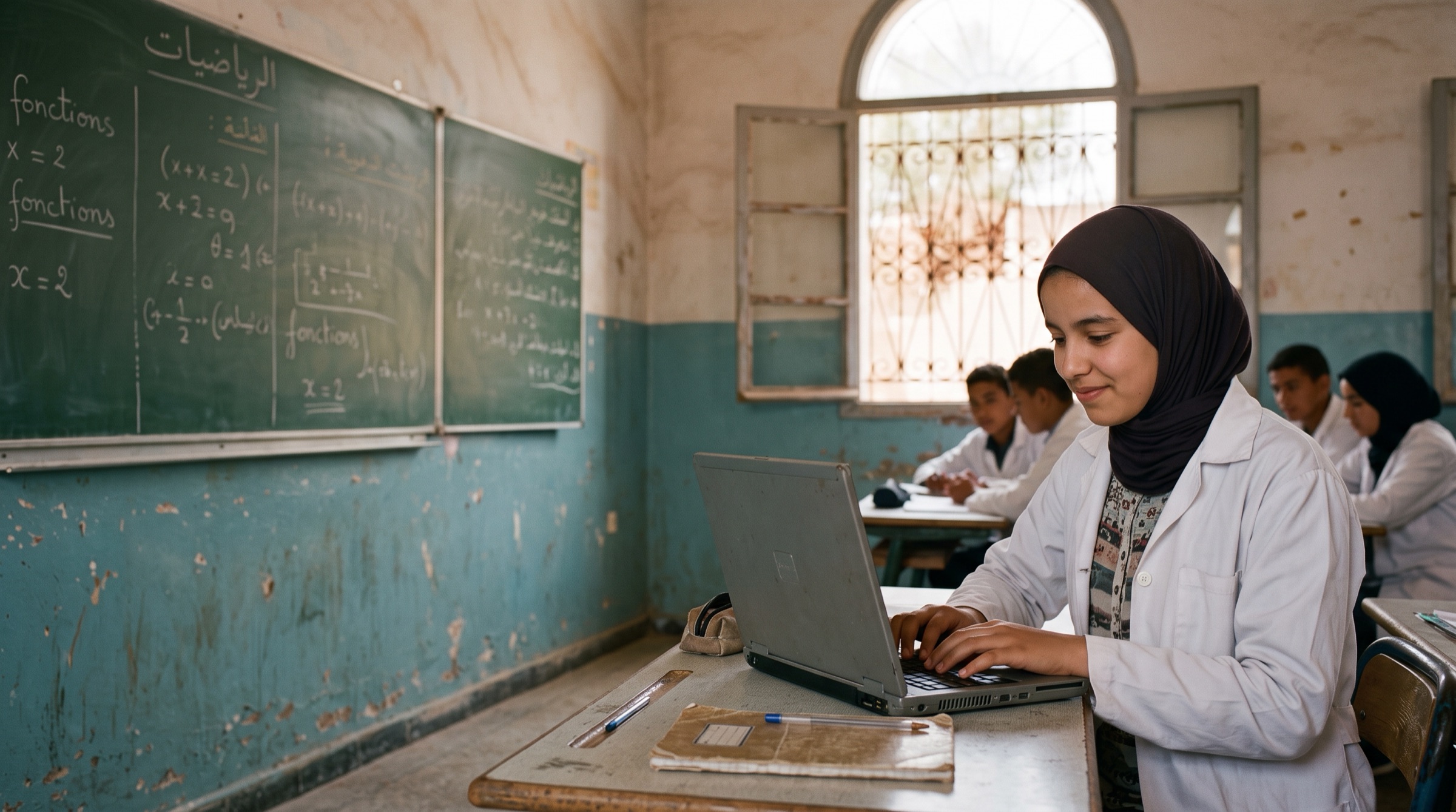
How spare computer power gives students in Sri Lanka and Morocco AI without limits.
The problem · worked example: Sri Lanka
In Sri Lanka, the students who build run into a paywall they cannot pay
Free chat is unlimited now. Coding agents, API keys and bulk work still cost $20 a month or a dollar credit card.
- $20
a month for the tools that build careers
- 22%
of Sri Lanka’s minimum wage (LKR 30,000 a month)
- None
of CYTC’s students in Sri Lanka can pay it. Heavy users hit the limits first.
“If they know how to use it, they can learn anything.”
The idea: Compute for Impact
AI without the paywall, through the school’s computer lab
A student asks. A spare computer answers. Chat, a coding agent and a personal API key on open models, used on the school’s computers and powered by resting laptops elsewhere.
- Step 1
A school applies
It says who it is and what its students need. The computer lab is the channel: most students only have a phone.
- Step 2
Its students get access
A school space and a class code. Students who build get a coding agent and a personal API key. Nothing to pay, no seats to buy.
- Step 3
A donor’s computer answers
Each request runs on a resting laptop, in a sealed space, on open models. A cloud backstop answers when no donor is resting.
- Step 4
The answer goes back
In seconds. The donor sees a heart beat and the impact at a high level: students served, hours donated. Never what students build or ask.
What students get
Free tiers cover chat. We cover building.
Limits as of October 2026; they change often.
| ChatGPT Free | Claude Free | Tokens for Good | |
|---|---|---|---|
| Everyday chat | Yesunlimited since Aug 2026 | Limited5-hour session cap | Yesno limits |
| Coding agent | LimitedCodex, limited use | Noneeds Pro, $20 a month | Yesopen-source, no limits |
| API key to build apps | Nopaid separately | Nopaid separately | Yesa free key per student |
| No ads, no training on your chats | Noads; trains on chats | Yesno ads | Yesprivate both ways, nothing stored |
The business case
One year of AI for one student
with a $20 subscription
with Tokens for Good: a donor’s electricity. The compute is donated.
Organisation costs are negligible at small volumes. Not like for like: a subscription buys frontier models; we offer open models without limits.
Case study
The Liv Foundation, CYTC Sri Lanka: 150 students a year
- The school’s total budget per year$50,000
- AI subscriptions for 150 students at $20 a month$36,000
- Tokens for Good: donated electricityabout $600, no cash
A subscription for every student would eat 72% of the school’s budget. With Tokens for Good the same students get open-source AI without limits, for the price of a donor’s electricity.
What it takes
Forty professionals’ laptops carry a school of 150 students
- 150
students, 60 AI requests a day each
- 15
laptops resting and online at the peak, one of them spare
- 40
donors registered, with 40% online at any moment
One MacBook or Windows laptop with a graphics chip serves about 40 tokens a second on an open 8B model. The school’s peak is about 560 tokens a second.
The donor app only runs when the laptop is plugged in, charged and resting. Light, Balanced or Generous; pause with one click. About €10 a year in electricity per donor.
Assumptions: 3,000 tokens in and 600 out per request, peaks at three times the average, a 10-hour school day. A laptop without a graphics chip adds little.